





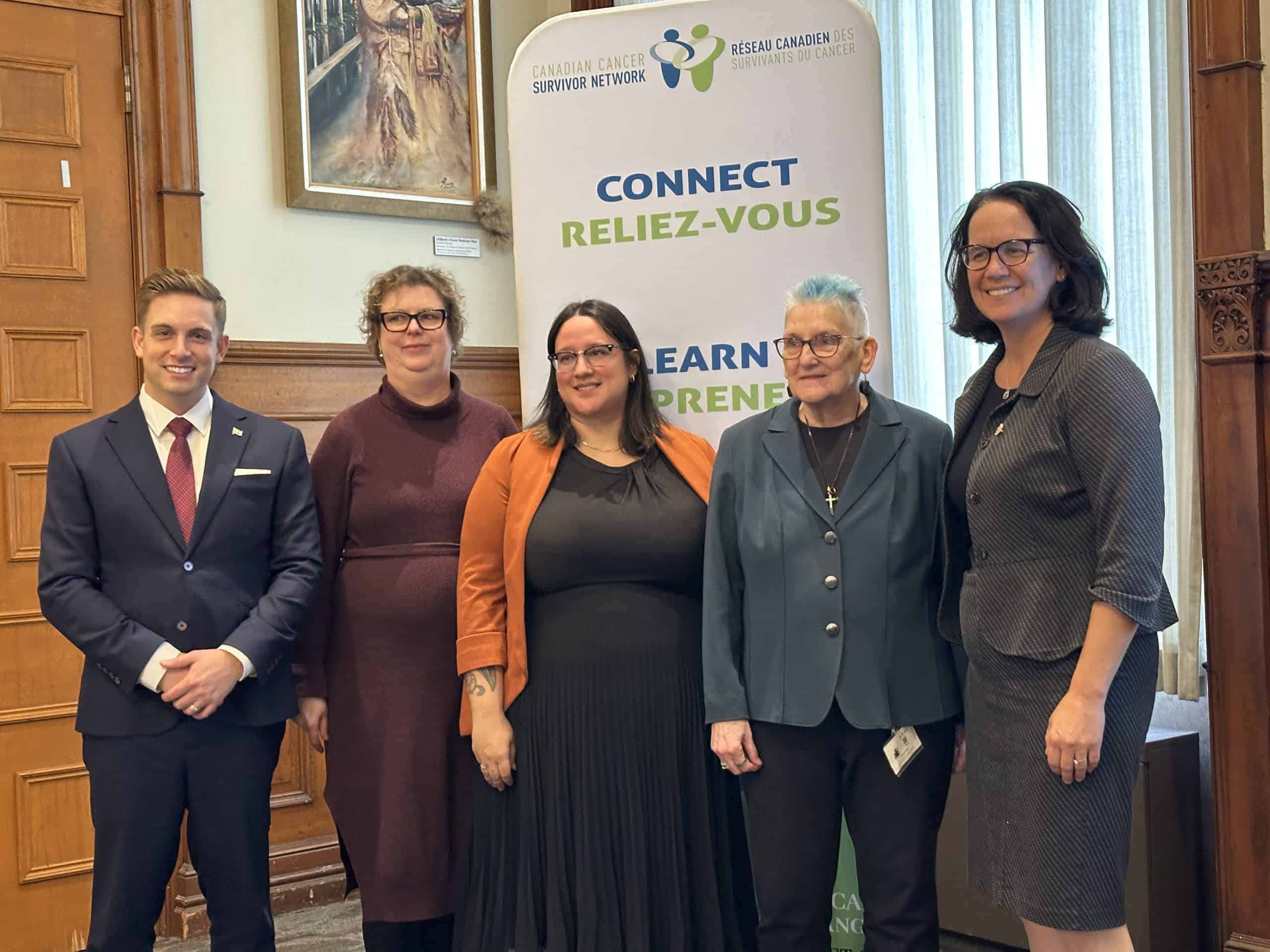
The Canadian Cancer Survivor Network (CCSN) held its annual Ontario All-party Cancer Caucus (APCC) at Queen’s Park, Toronto, ON, on October 29th, 2025. This was CCSN’s third APCC of the year, the previous two held in British Columbia and Saskatchewan in the spring.
President & CEO Jackie Manthorne returned to speak with MPPs for the first time since May 2024. She was joined by Lindsay Timm, now presenting to policymakers in her new role of Executive Director of CCSN. The Network also brought along two new faces to the APCC: Bulambo Nyababa, Social Policy Researcher, and Jennifer Spence, Office Manager. CCSN invited one guest speaker this year, Laura Greer, Executive Vice President at Burson, Health & Wellness + Global Client Lead, and patient advocate.
Lindsay Timm Greets MPPs as New Executive Director
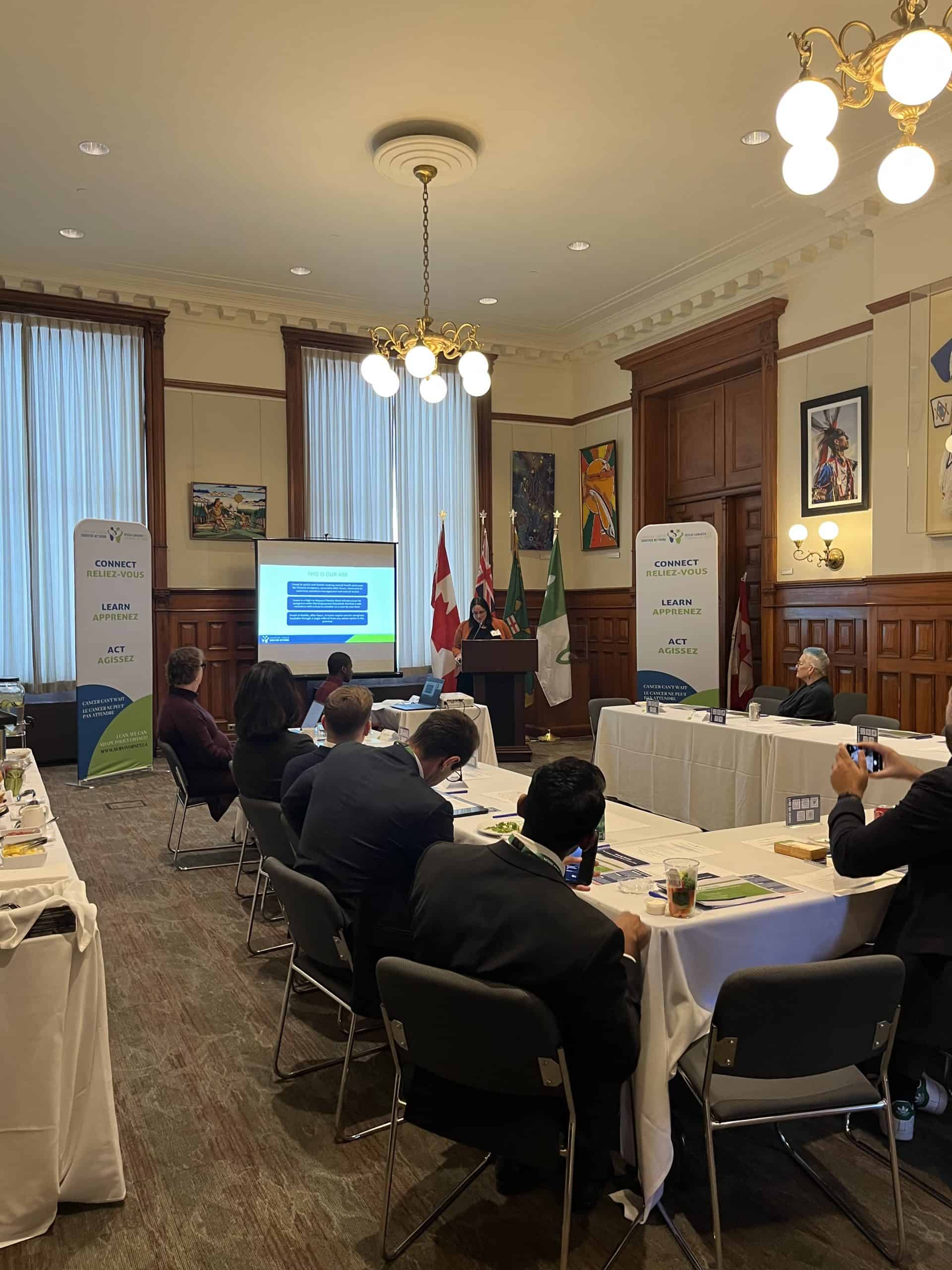 The meeting kicked off with Lindsay Timm delivering opening remarks. She introduced those who were in attendance from CCSN, and gave a land acknowledgement recognizing the Treaty Lands and Territory of the Mississaugas of the Credit and the traditional territory of the Anishinaabe, the Wendat, and the Haudenosaunee. Timm added that the territory is within the lands protected by the Dish with One Spoon Wampum Belt Covenant, an agreement between the Haudenosaunee and Anishinaabe and other allied nations to peacefully share and care for the resources around the Great Lakes.
“Being here today at the Ontario Legislature – just a short distance from Lake Ontario – and in the ? dwa? na ga da:t Room, or ‘we will raise our voices together in unison’ in Haudenosanunee is so meaningful. We are surrounded by a collection of beautiful Ontario Indigenous art and artifacts that reminds us that this is home to many Indigenous people from across Turtle Island. We are grateful to work – and meet with you all – on this land.”
Timm began her remarks by offering praise to the government for what it has done so far in the healthcare space.
“First, with the initial investment of $110 million dollars in primary care teams in 2024, the Health Care Connect waitlist has been reduced by over 50 per cent. This means that more Ontarians are receiving care in their communities that not only serves them during a crisis but can also provide ongoing and proactive care. With more funding being announced we are eager to see continued success through the Primary Care Action Plan.
“Second, earlier this month the Ontario government announced the Funding Accelerated for Specific Treatments (FAST) program. We applaud you all [for] supporting this program to get life-saving cancer treatments into the hands of patients faster when time is often the enemy. With the current health technology assessment pathways that are in place it is encouraging to have some of the red tape reduced.”
“Third, we commend you on the work that has been done to progress and broaden access to current cancer screening programs in the province. CCSN has presented on the topics of breast, lung, cervical, and colorectal cancer screening. You have acted on two of four of these programs to allow for greater access to screening. Thank you.”
However despite these gains, Timm said more work must be done within the programs themselves. She shared that the lung screening program has rigid criteria for acceptance and needs to be more geographically diverse. The breast screening program does not offer annual screening for ages 40-49 and there is no self-referral for a mammogram after age 74. The colorectal cancer screening program still only targets people between the ages of 50-74 when there has been growing evidence to support lowering the age for the program. The cervical screening program has been converted to include testing for HPV although there is no inclusion of self testing.”
Timm then advanced to a slide to show a newspaper advertisement from the Government of Ontario. The advertisement featured a man in 1970’s styled clothing using a landline phone. The text of the advertisement read “If you used a phone like this, It may be time to get screened. Over a certain age? The sooner you catch cancer, the easier it is to treat. Talk to your doctor or your nurse practitioner and book a screening today.”
“Does this look familiar?” Timm asked. “Ontario has launched this campaign for screening. We are in full support of the message being delivered through these ads. Catching cancer earlier is key to improving treatment outcomes. However, I worry that this ad may mislead some people. Now, I may not have had these fancy duds, but I certainly used a phone as pictured, and I am 34. This means that I am exempt from the majority of the screening programs that exist.”
Timm said there is a growing population of individuals being diagnosed with early onset cancer, along with a large aging population. With the current age limitations on screening programs it delays diagnosis, clogs ERs, and stresses the healthcare system resources.
“This is why you have heard us mention in the past “No Age In, No Age Out”. We truly believe that with fewer barriers to screening we can improve survivorship and close gaps in care before they become a problem in the future.”
Timm then read a statement from the Cancer Action Now Alliance, of which CCSN is a member. The statement read:
“We firmly believe that the health of Canadians living with cancer is not a competing priority, but rather a fundamental component of a resilient and productive economy. The profound economic burden of cancer is undeniable, impacting workforce participation, productivity, and healthcare expenditures across our nation. This is a challenge that demands our collective attention and proactive solutions.
“Canada possesses a unique opportunity to lead the world in cancer care and innovation. By fostering an environment that promotes and attracts expertise and investment, we can significantly strengthen our domestic capacity in this critical field. This caucus represents a crucial step in realizing that potential.
“Investing in timely, equitable, and innovative cancer care is not a discretionary expense; it is a strategic investment in Canada’s economic future. It is about optimizing our human capital, ensuring a robust and resilient workforce, and ultimately, building a healthier, more prosperous nation for all. We applaud CCSN for bringing together such a diverse and influential group, and we look forward to the impactful discussions and collaborative actions that will undoubtedly emerge from this important event.”
Finally, Timm thanked MPP Lorne Coe for continuing to support our All-party Cancer Caucuses, and all those in attendance.
The Results of CCSN’s Caregiver Survey
CCSN once again commissioned Leger to conduct an online study to identify and understand the experiences, challenges, and support needs of caregivers for cancer patients in Canada. The ultimate goal is to have conversations with existing caregiver organizations to help enhance support systems and resources for cancer caregivers.
The survey garnered responses from 1,000 Canadians who currently act as a caregiver to at least one patient with cancer or who have acted as a caregiver to a patient with cancer within the past five years. The survey was available in English and French. Thirty-nine per cent of the responses came from the province of Ontario.
Leger’s LEO Panel was utilized to recruit the respondents. Respondents were required to be 18 years of age or older, unpaid for their caregiving services, and must have selected at least two items from a provided list that they help provide to the person that they care for.
“We had participation from across all the provinces.” Timm said. “There was an even split of male and female caregivers. Caregivers were 48 years old on average. One-in-three respondents are current caregivers. More than half are working full/part-time, and a quarter are retired. Twenty-three per cent of respondents live in a rural setting, 51 per cent in a town/city, and 26 per cent metro.”
For a more detailed breakdown of the survey, click HERE.
Timm then introduced Jackie Manthorne to speak to the Caucus in the role of a caregiver for her late wife Mona Forrest.
Jackie Manthorne: “The world needs you to believe in the good.”
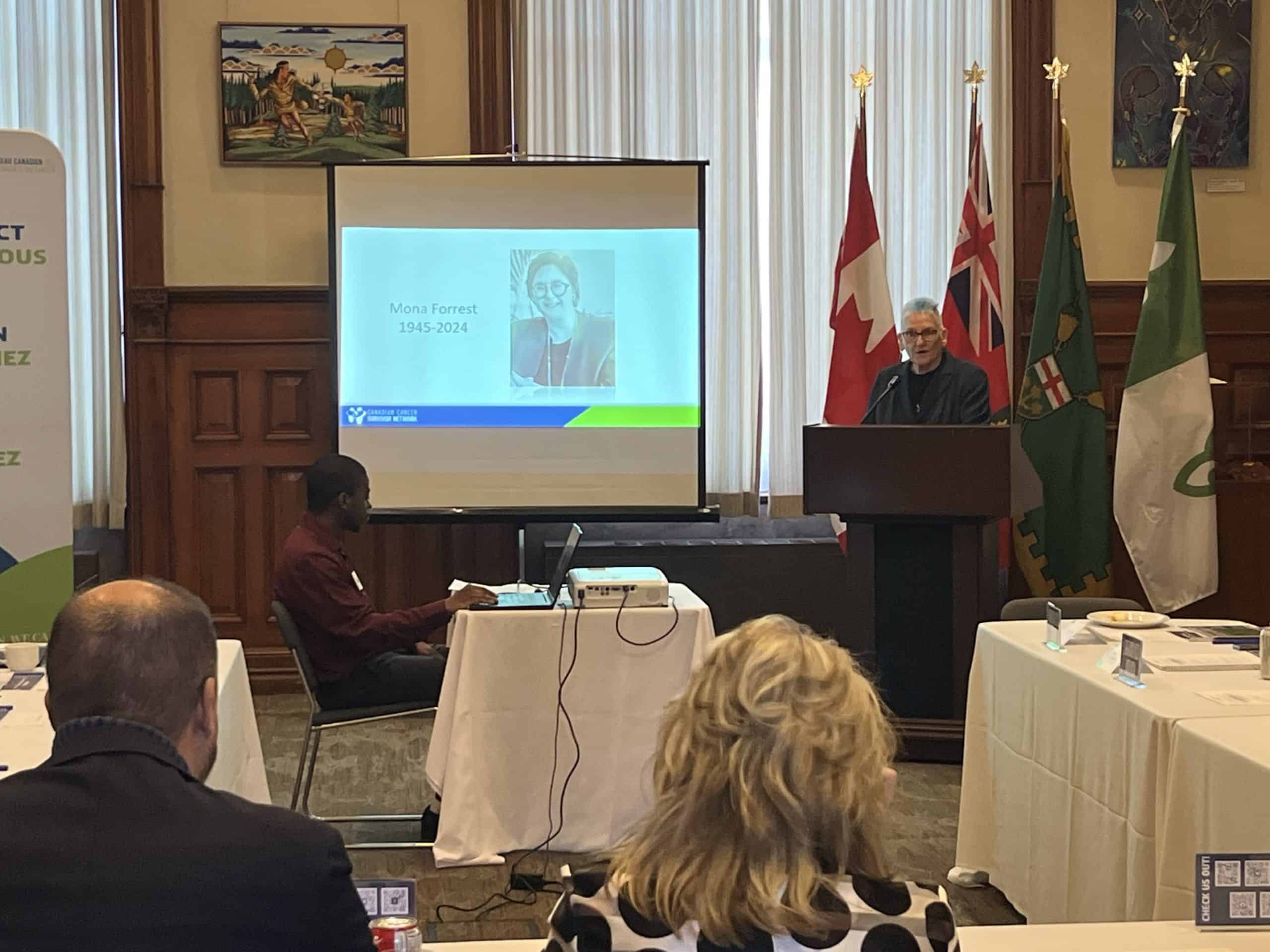 “I’d like to take off my hat as President & CEO of the Canadian Cancer Survivor Network (CCSN) and speak to you as the caregiver of my late wife, Mona Forrest.
“Some of you may have known Mona. She was one of the eight founders of CCSN, worked at CCSN and attended some of our early All-party Cancer Caucuses and Legislative Receptions. She and I were together for 52 years before she died in September 2024 of several chronic diseases, including myelodysplastic syndrome (MDS), a red blood cell cancer caused by a mutation that left her dependent on blood transfusions for the last three years of her life. As her MDS progressed, she grew progressively anemic, and her increasingly low hemoglobin left her fatigued and breathless.”
Manthorne said Mona also had stage IV kidney disease, congestive heart failure, pulmonary hypertension, and other chronic diseases that worsened over time. She had stage I, grade 2 breast cancer that was treated by surgery, radiation, and a medication to prevent recurrence.
“Like many family members, I became a caregiver over time.” Manthorne explained, “I was working full time in 2017 when she had open heart surgery, a triple bypass and an aortic valve replacement. After that, she asked me to take over her medications. Around that time, I started attending her doctor’s appointments and tests. During COVID, many of her appointments were over Zoom or Teams, but at one point, Mona was in the hospital for 21 days when no one was allowed visitors. We used to wave at each other, Mona at a 3rd floor window, me standing on the pavement beside our car.”
As her condition deteriorated, Mona was increasingly hospitalized for longer stays. In 2024, Manthorne said her wife was hospitalized five times. The majority of those times were for pneumonia, from which Mona never did recover. During later visits, the option of palliative care was first raised. Mona didn’t want to hear about it and came home on oxygen 24/7.
“When she was back in hospital in August 2024, a different palliative care doctor came in, sat on her bed, and told her that the specialists could do nothing more for her, and that she had three options: continue to see her specialists but being admitted to hospital more often and possibly dying there; going directly from the hospital to a hospice; or going into palliative care at home.
“She chose to come home in palliative care.” Manthorne said, “That is when I became a full-time caregiver.”
In CCSN’s survey, over 70 percent of caregivers reported that the emotional stress of caregiving was a major challenge. Manthorne said that watching Mona’s condition worsen over time was emotionally overwhelming, as was the knowledge that she could do nothing to make her better, no matter how desperately she wanted to. Her role as a caregiver was to make Mona as comfortable as possible while she was dying.
Mona was in palliative care at home for 35 days. When it became dangerous for her to eat or drink, Manthorne said her palliative care doctor came to the house and told her that Mona needed intravenous meds, which she couldn’t administer. Mona was moved to May Court Hospice later that day, and she fell into a coma and died two days later.
“The shock and grief fog that descended once the funeral was over somewhat protected me from the full force of grief. “ Manthorne said, “Thirteen months later, I am still grieving. What I have learned is that grief for the loss of a life partner never entirely goes away, but the pain lessens over time.”
Manthorne said several supports were missing during her journey, particularly emotional support. Between watching her wife pass and the lack of supports afterwards from the palliative care team or the community, Manthorne had to depend on close friends and her five former foster children for support. However, through meditation and therapy, she had begun to adapt to her new normal.
“We talk about cancer patients who survive developing a new normal; this is also true of cancer caregivers. Life is never the same, and for those whose loved ones die, everything changes.
On the first anniversary of Mona’s death, about 20 of us gathered at the cemetery and then at my home for drinks and munchies. During our gathering, I read what I felt Mona would read if she were there:
Don’t give up on this year.
Keep fighting for the good.
Keep showing up.
Keep loving.
Keep giving back.
Keep being kind.
Keep caring.
Keep trying new things.
Keep showing grace.
Keep on.
The world needs you to believe in the good.
I think that this applies to all of us, including you as politicians and to those of us who survive cancer and those who care for them.”
Timm then returned to the podium and urged lawmakers to make the following changes as a result of the study:
- Invest in public and bolster existing mental health pathways for Ontario caregivers, accessible after hours, measured on wait time, symptom management and ease of access.
- Invest in a Right to Request Flexible Work infrastructure for caregivers under the Employment Standards Act that is anti retaliatory with a duty to consider on a case-by-case basis.
- Invest in flexible, after-hours, in-home respite care for caregivers bookable through a single referral from any cancer centre in the province.
Laura Greer: “The government needs to follow through on their commitment to this issue.”
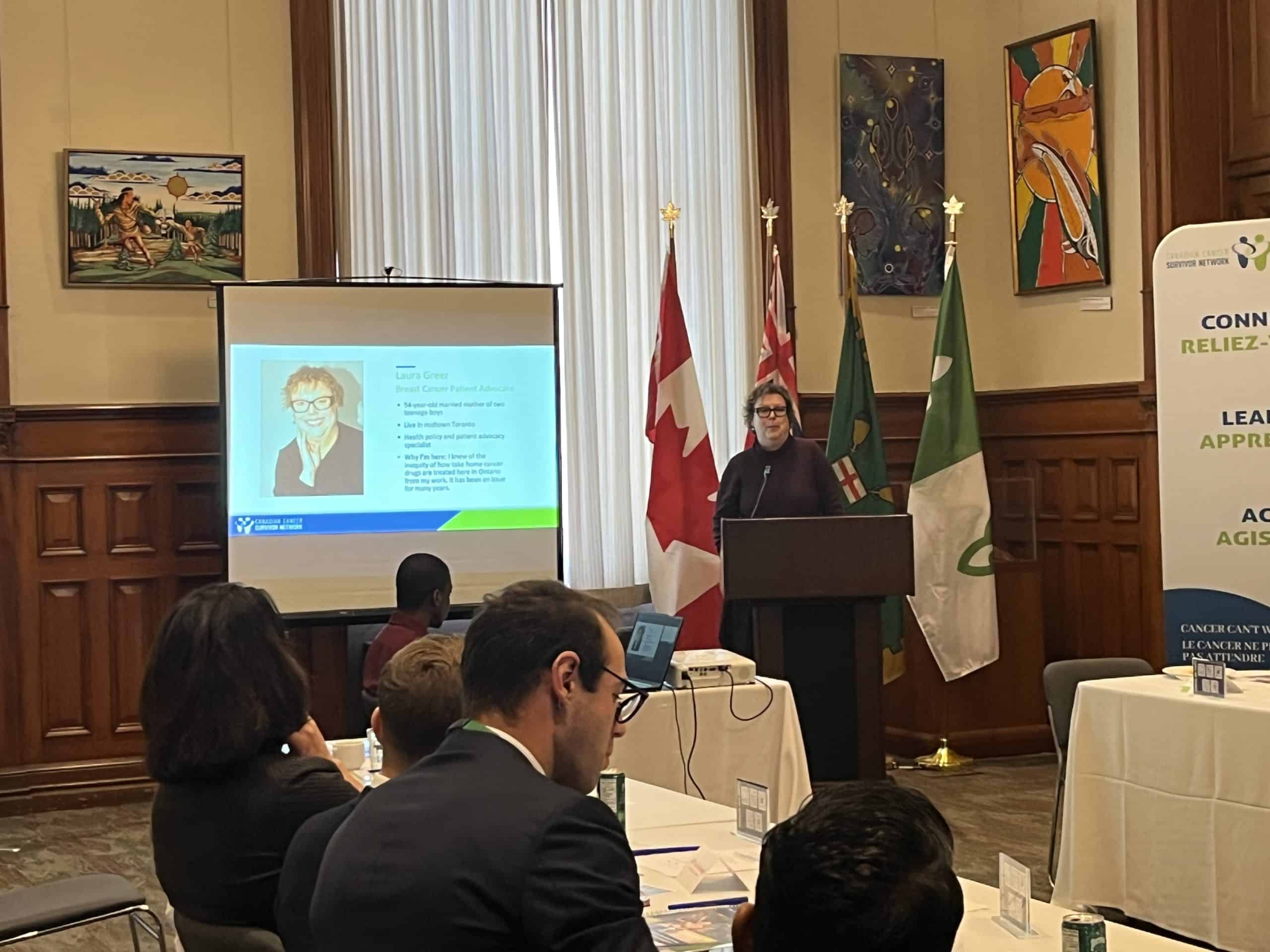 Timm then introduced Laura Greer, Executive Vice President at Burson, Health & Wellness + Global Client Lead, and patient advocate. Greer and CCSN has had a long working history, with Greer saying she had known President & CEO Jackie Manthorne for over the last 17 years. Greer is also a metastatic breast cancer patient who was diagnosed four years ago. However, even with 25 years of health, public affairs, and advocacy experience, she did not expect to deal with the financial challenges of take-home cancer drugs herself.
“I’ve been aware of the policy challenge or problem of the lack of coverage for take-home oral cancer drugs for many years. I professionally worked on that issue. I guess I’m here to reinforce that something needs to be done about that. There was a commitment from the Progressive Conservative Party to establish an advisory committee as part of the 2022 election to look at this issue and develop possible solutions. And I’m here today because I’m very motivated to see this change because it is something that I knew was a problem but experiencing it firsthand is a challenge.“
Greer brought two boxes with her, both of which were medications for her post-chemotherapy cancer care. The first was an aromatase inhibitor, a standard generic drug that she said was not a problem to get. The other one was a CPK46 Inhibitor, which Greer said was standard care for metastatic breast cancer patients. These pills needed to be taken three times a day, every day, for three weeks, with a break week in between.
“I did empty the [CPK46] box though because it’s $6,500 a month and I did not want to lose that on my way to the legislature.”
Greer said that she was grateful for her employer benefits, but for many Ontarians, especially young ones under 65, this is not always the case. Greer said she also fell under this category, as she was diagnosed at 50 with cancer. With cancer diagnoses getting younger, she noted that many people are now getting cancer who are in their working prime, and are therefore unable to obtain things like the Ontario Drug Benefit.
“Ontario and Atlantic Canada are the only areas of the country that consider it this way, and it is really something that doesn’t make logical sense.”
Greer, a mother of two, Toronto resident, and a member of the Cancer Action Now Alliance. Her stage IV metastatic breast cancer diagnosis in November 2021 turned her life upside down. Although Ontario has lowered the age at which one can get a mammogram, Greer was not able to take advantage of that. In addition, the pandemic caused issues of its own.
“I was due for a mammogram in the spring of 2020. We all know what was happening then. Go forward a year and I did have a great family doctor who was seeing people in her office. I was having some other issue that I went in for and while I was there said ‘what about my mammogram’.”
Greer was able to get an earlier mammogram because she had a history of breast cancer through her mother’s side. What made diagnosis complicated was her breast density, which has only recently been included in mammogram test results in Ontario. When she went for her mammogram at Mount Sinai Hospital in Toronto, her stage IV cancer was discovered.
Greer’s cancer journey continued to have complications. Due to the surgical backlog in Ontario at the height of the Omicron wave, Greer was undergoing neoadjuvant chemotherapy, where chemotherapy is used to shrink a tumour before ultimately being removed by surgery. In addition, the cancer had metastasized to her bone. Greer said her type of cancer, lobular breast cancer, was more difficult to detect, and had been spreading for at least a year before her diagnosis.
“I had a great team at Princess Margaret [Hospital]. I cannot speak enough about the great people that we do have in our healthcare system, but I cannot underscore enough the stress it puts a patient through not knowing if your treatment, which again is standard of care, will be covered or not. I had already looked at my benefits to see what would be covered because I knew of the policy issue. Normal people probably wouldn’t do that.
“I was supposed to start chemo on January 3rd of 2022. It took over three weeks for just the paperwork for an approved medication that is on my [coverage]. It involved things like getting your oncologist to do a hard copy signature and just pieces that really don’t make any sense, at the time when we were trying to keep people out of hospital.”
Greer notes that she was fortunate with her coverage, and the fact that she could still continue to work full-time through her treatment. She pointed out that this disproportionately impacts younger Ontarians who are diagnosed with cancer because they are not covered by seniors’ drug benefits. Greer urged the government to commit to the issue more clearly, adding that it does not necessarily need to be coverage for everyone, and that private insurance could fill the gap as well. She stated that the system should not “penalize where treatment is taking us”. Greer concluded that treatment needs to meet where the science is, and that cancer treatment in Ontario should reflect what treatment is capable of.
“When I was diagnosed, I said if this is the last thing I can change, I will do that.”
Q&A
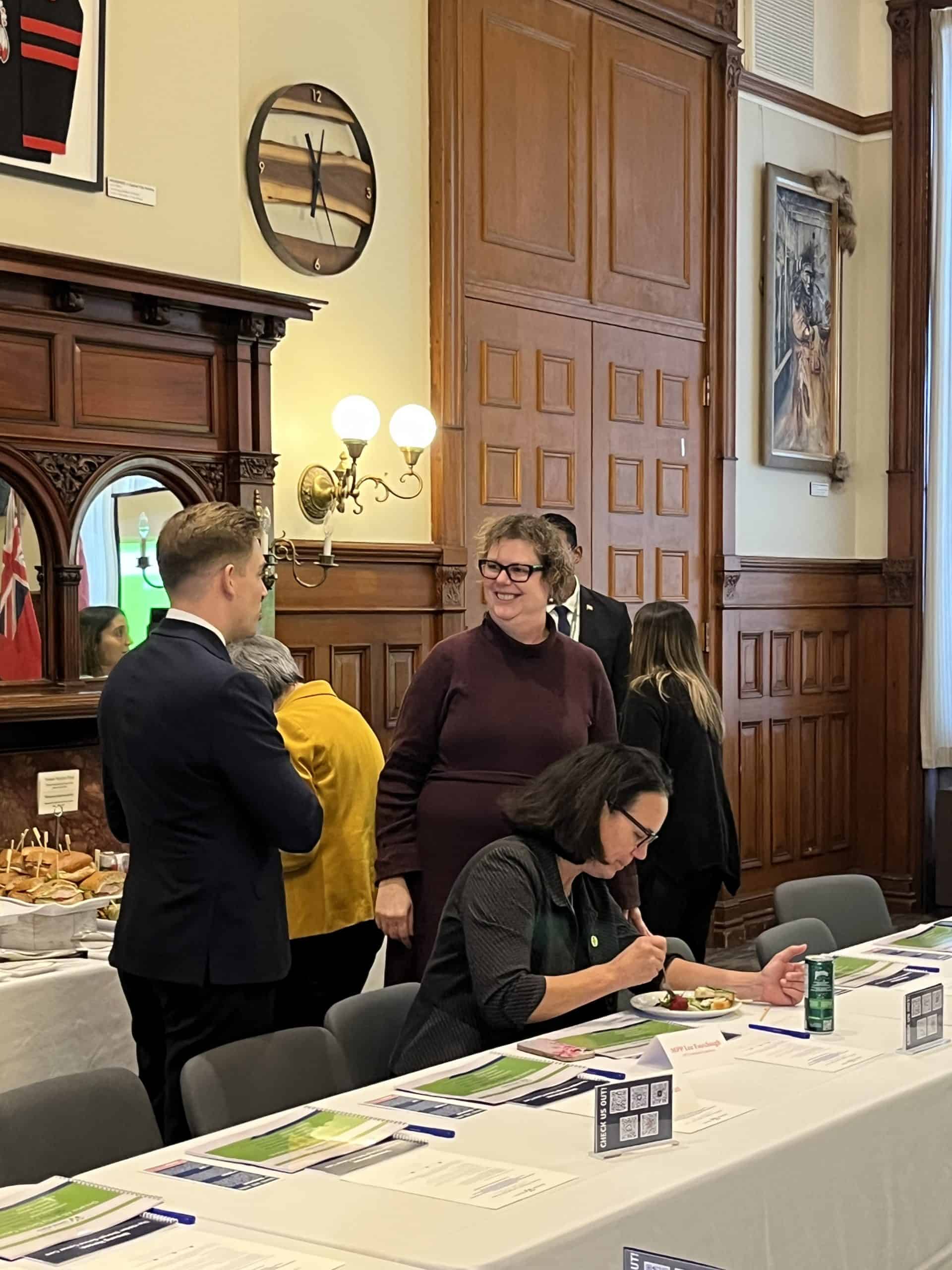 Although many MPPs were summoned to vote by the time the meeting reached the Q&A session, several policymakers had questions and comments on the presentation. Tyler Watt, MPP for Nepean, shared his experiences with his father, who passed away from amyotrophic lateral sclerosis (ALS).
“My mother, myself, and my brother became his caregivers over the two years as his disease progressed, and everything you said there really hit me in the heart and we certainly need to do more for caregivers because our system depends on them, and frankly it’s not fair.”
Lee Fairclough, MPP for Etobicoke-Lakeshore, also had parents who needed caregiving, and spoke of her challenges with getting access to home care and affordable take-home cancer drugs. Even though she worked in the healthcare field, she said it was difficult to get anyone to do reliable homecare.
Timm then had some closing remarks, “Before we close out today’s meeting, I would like to remind you that Cancer Can’t Wait. On September 23, the Government of Canada made an announcement that they will be investing in critical research infrastructure to ensure that public health and immunization programs are as effective as they can be in protecting the health of Canadians. This is a good start, but we also need to be prepared for natural disasters with our shifting climate.
“We can’t stress enough how important it is for the provinces to follow suit and be prepared and have a proactive plan for future pandemics, health emergencies, and natural disasters that could disrupt cancer care and health care. None of us are exempt from the roulette wheel that is our health. Let’s do this not just for the people in this room but for the people we serve.”
Continuing Discussions
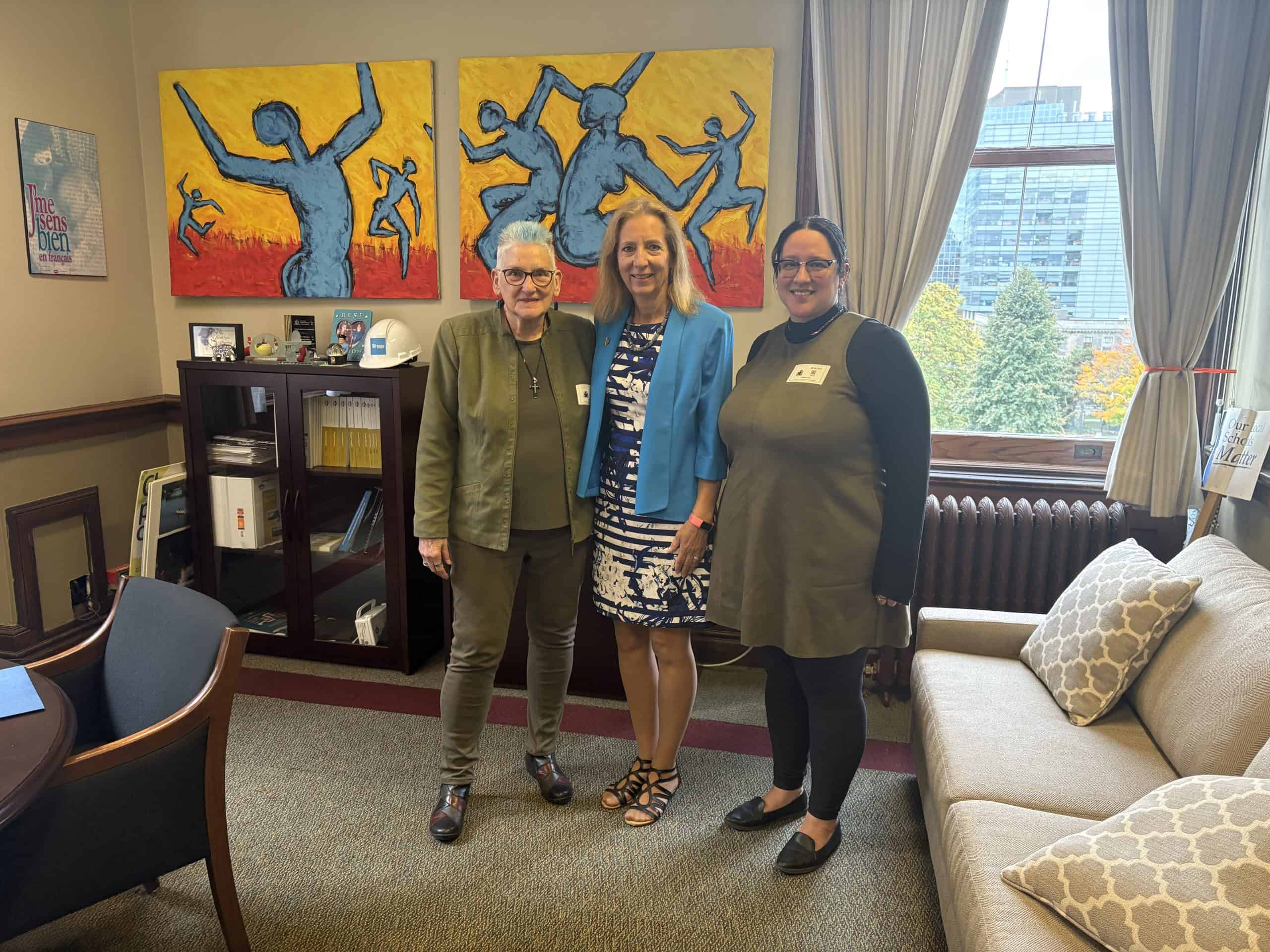
As a result of several events at Queen’s Park, last minute meetings, and a condensed voting schedule, a number of MPPs were absent from the APCC this year. While several MPPs sent aides to pick up copies of our survey report and PowerPoint Deck, many others agreed to take part in virtual meetings. These meetings took place in November and December of 2025 as follow-up to the APCC.
In the meetings, CCSN stressed how we would like to shift the narrative around healthcare as not a budget burden but an economic investment and driver: if you invest in healthcare, you are investing in people. Having healthy people means society has a healthy workforce who can contribute to a strong economy.
The virtual meetings were held with the following MPPs:
Liberal MPP Dr. Adil Shamji – Don Valley East – Liberal Party Chief Whip, Critic for Housing, Critic for the Indigenous Affairs, and Critic for Primary Care, Urgent Care and Public Health
Liberal MPP John Fraiser – Ottawa South – Liberal Party Leader, Critic for Education, and Critic for Labour
Conservative MPP Joseph Racinsky – Wellington—Halton Hills – Parliamentary Assistant to the Minister of Red Tape Reduction, and Member of the Standing Committee on Finance and Economic Affairs
CCSN has scheduled further meetings with MPPs in 2026. Our organization plans to meet with MPPs until our next in-person All-party Cancer Caucus in Ontario.
List of Attendees of the October 2025 Ontario All-party Cancer Caucus
PC
Daisy Wai, – Richmond Hill – PA to Minister for Seniors and Accessibility; PA to Minister of Citizenship and Multiculturalism
Dawn Gallagher Murphy – Newmarket Aurora – PA to Minister of Long-Term Care
NDP
Chris Glover – Spadina-Fort York
France Gélinas – Nickel Belt – Critic, Health
Liberal
Tyler Watt – MPP Nepean
Lee Fairclough – MPP Etobicoke-Lakeshore
Green
Aislinn Clancy – Kitchener Centre
Checked-In
Kevin Holland, MPP Thunder Bay-Atikokan; Associate Minister of Forestry and Forestry Products
Hon. Lisa Thompson, MPP Huron-Bruce; Minister of Rural Affairs; (staff sent to pick up materials )
Hon. Caroline Mulroney, MPP York-Simcoe; President of the Treasury Board of Ontario and Minister of Francophone Affairs; (staff sent to pick up materials)
Hon. Stan Cho, Minister for Seniors and Accessibility; Scarborough North (staff sent to pick up materials)
This meeting is made possible with grants from: Amgen, AstraZeneca, Astellas, Eisai, Merck, and Sanofi