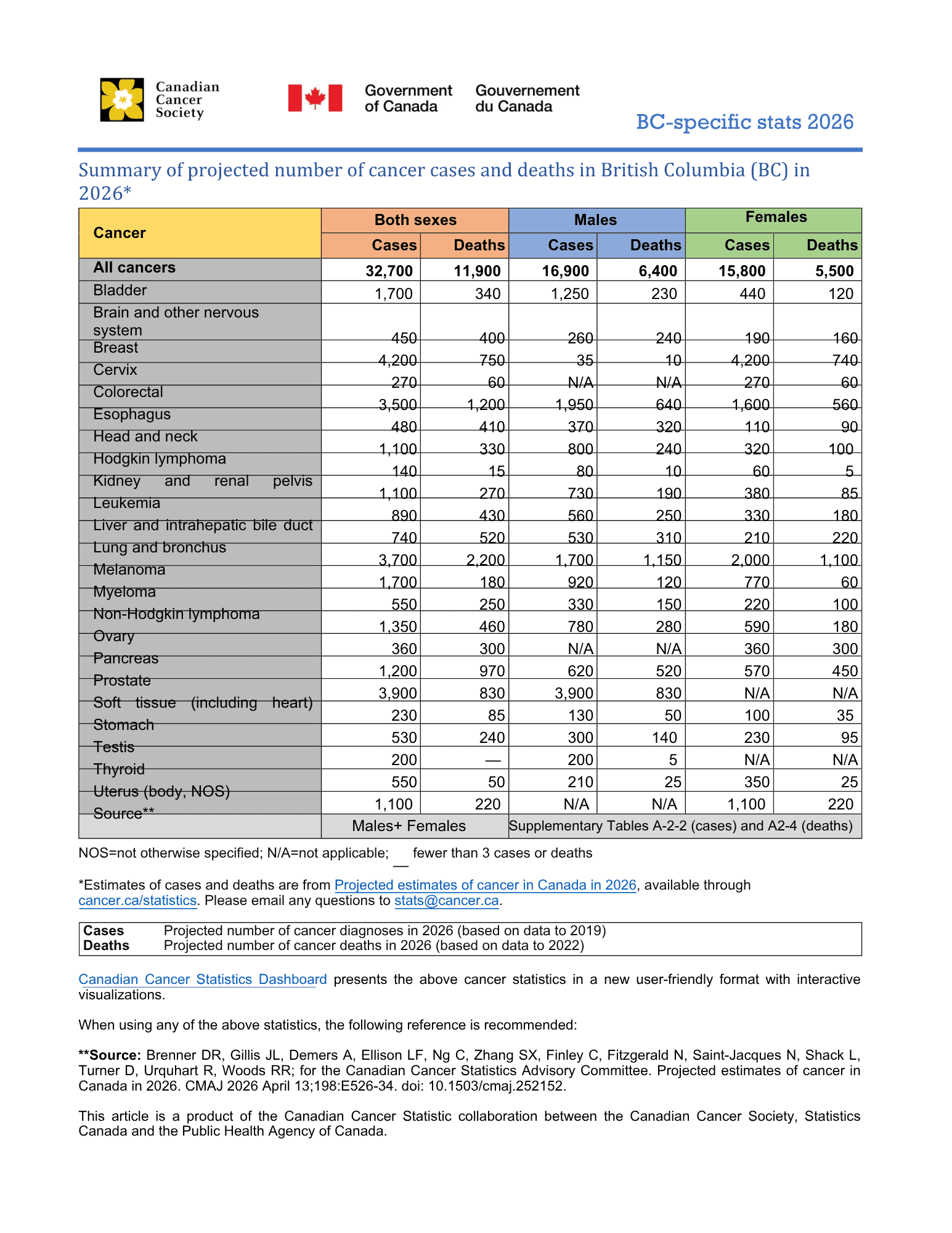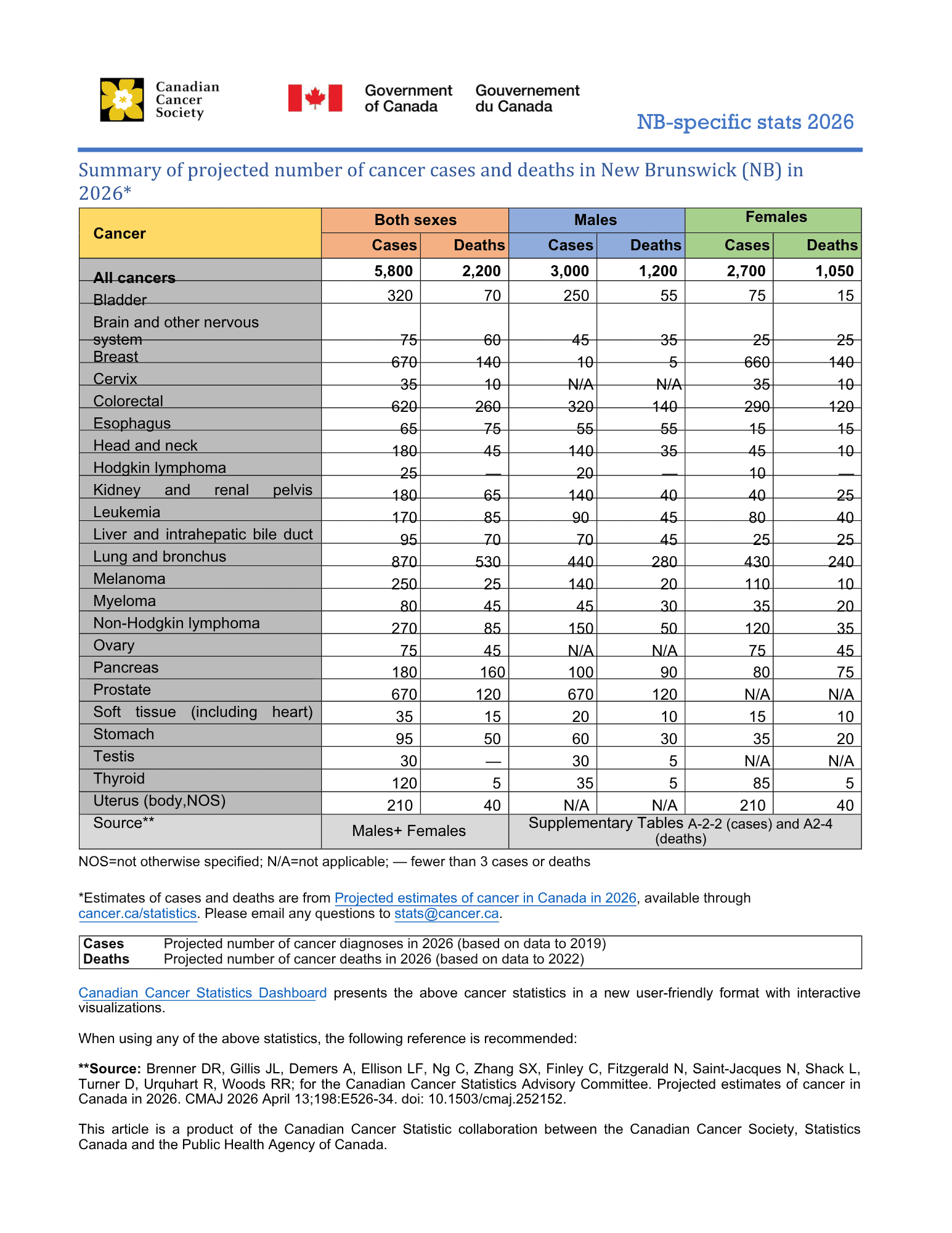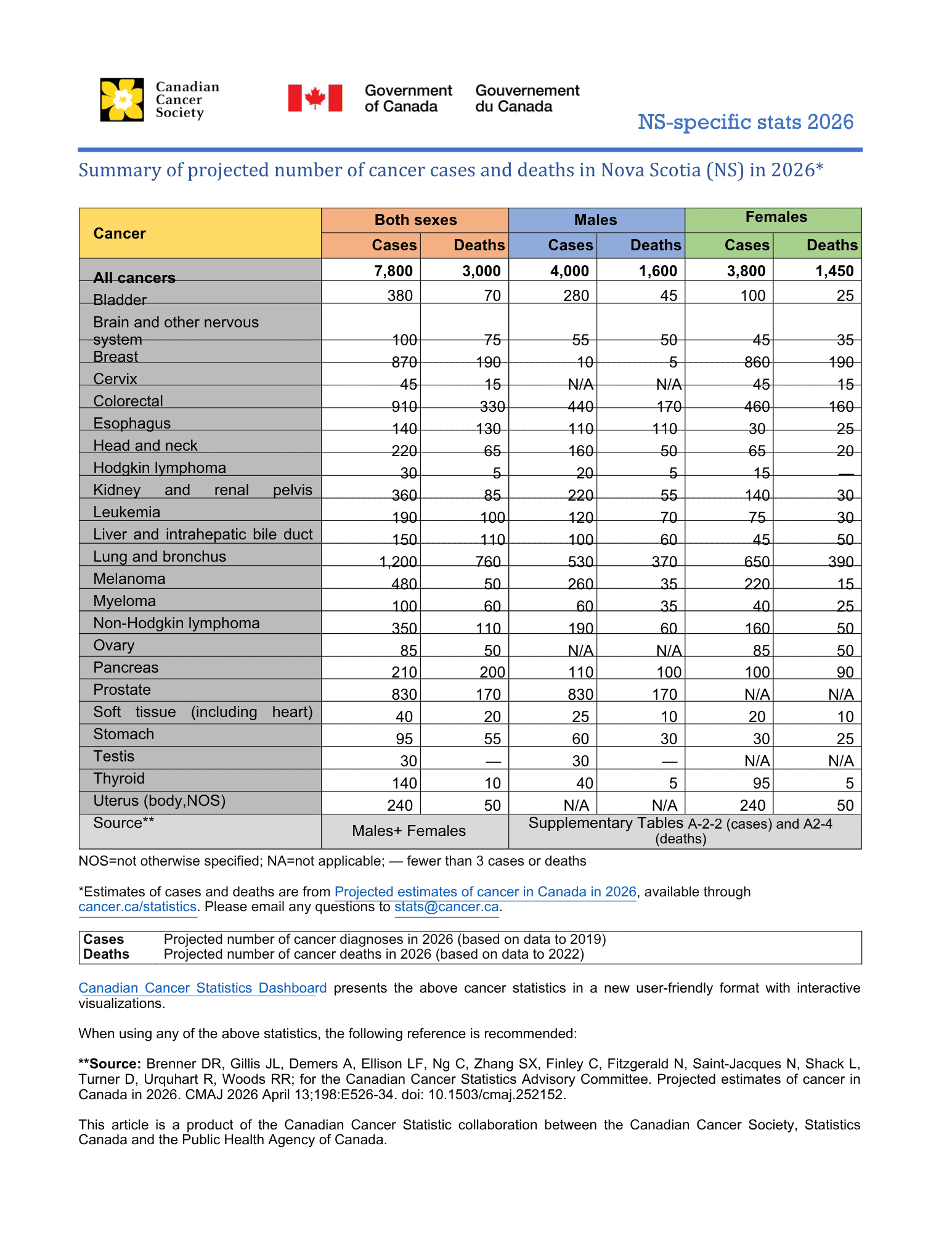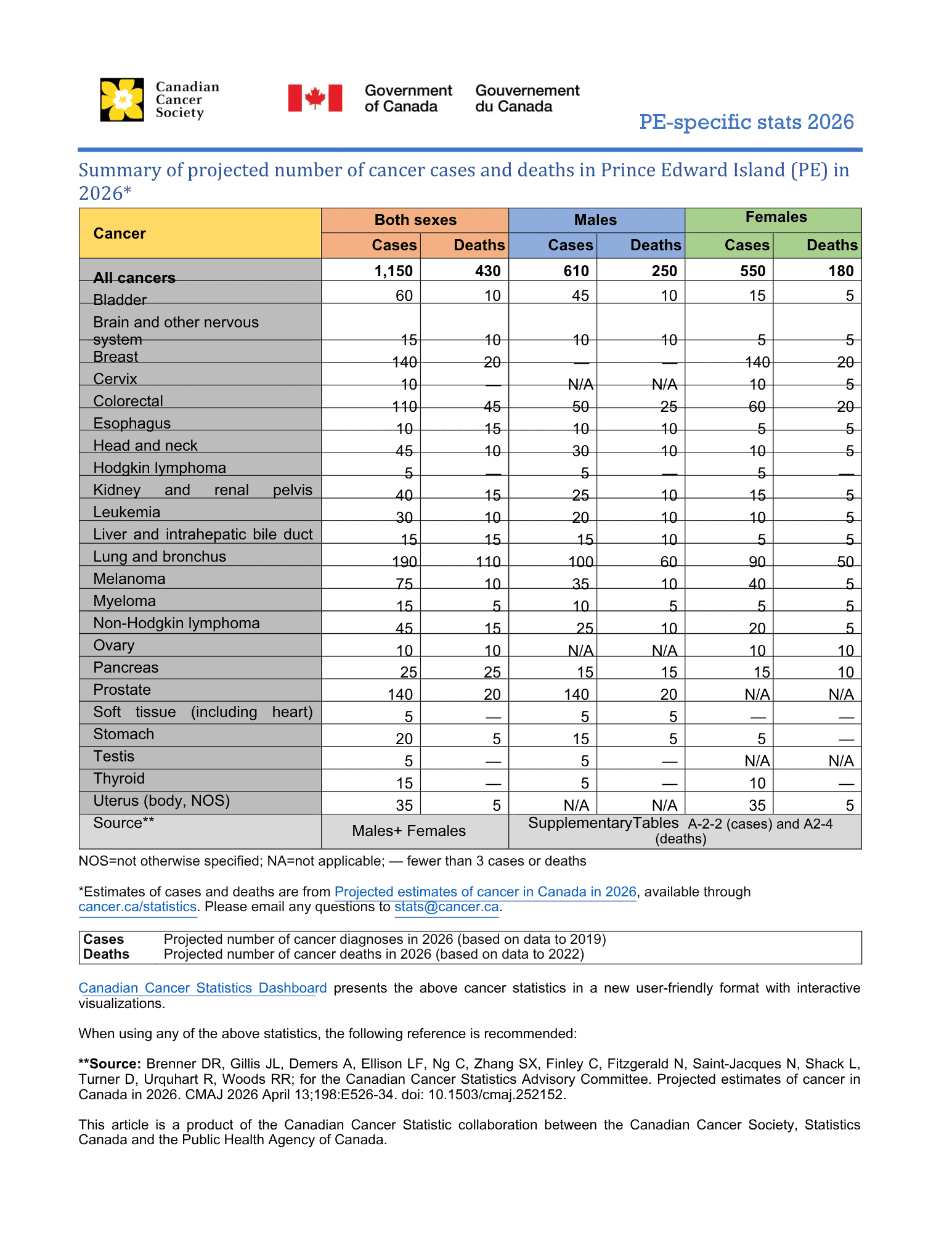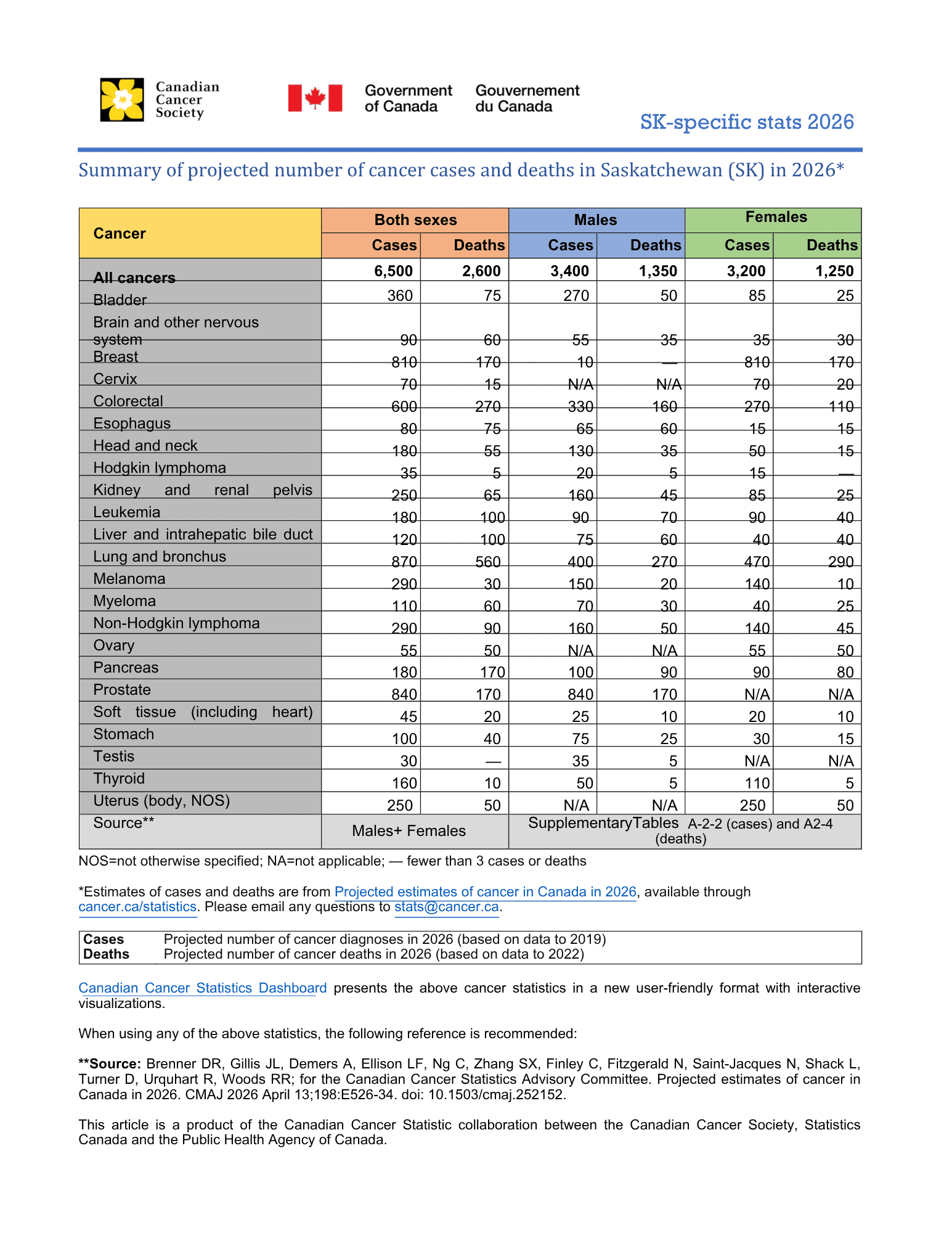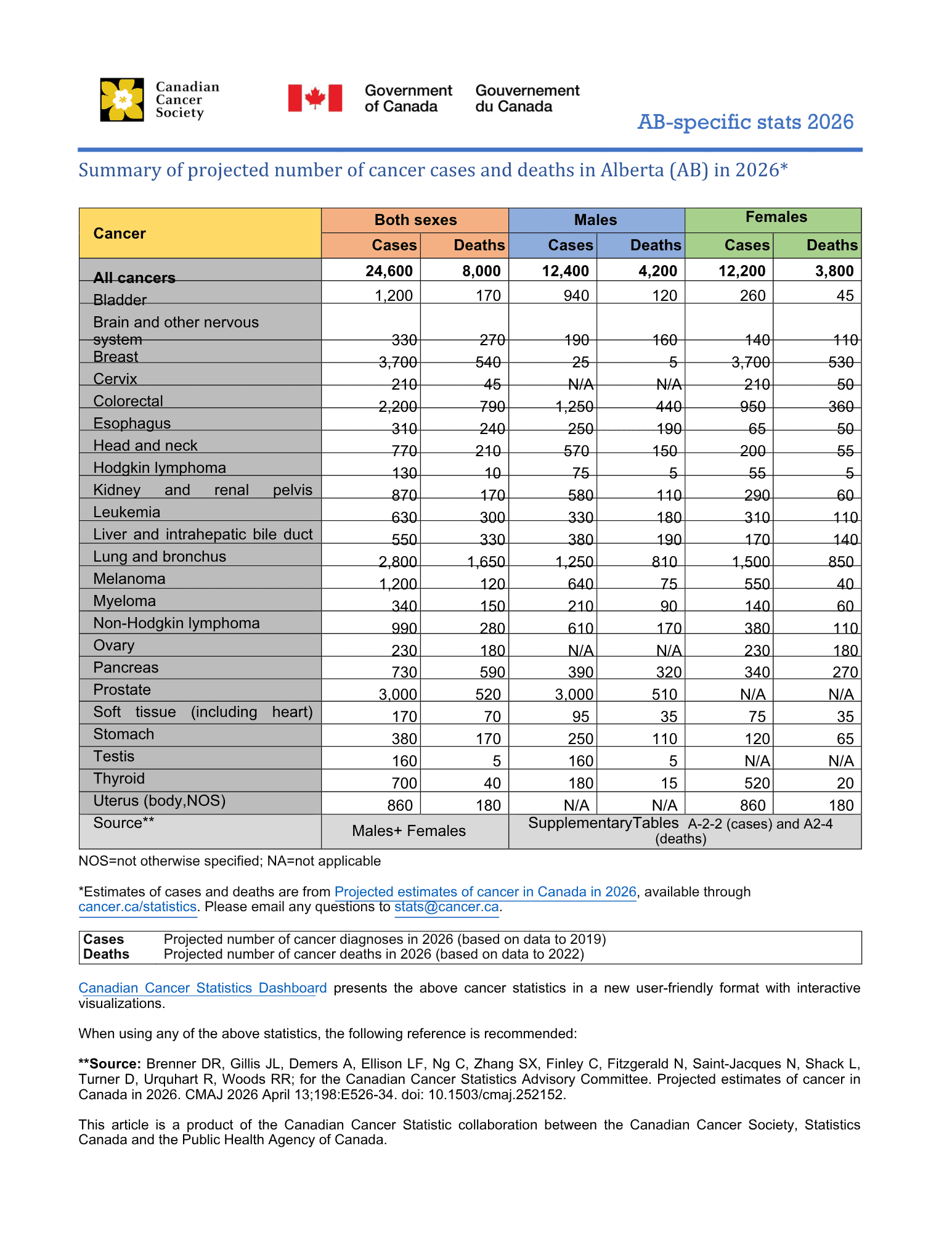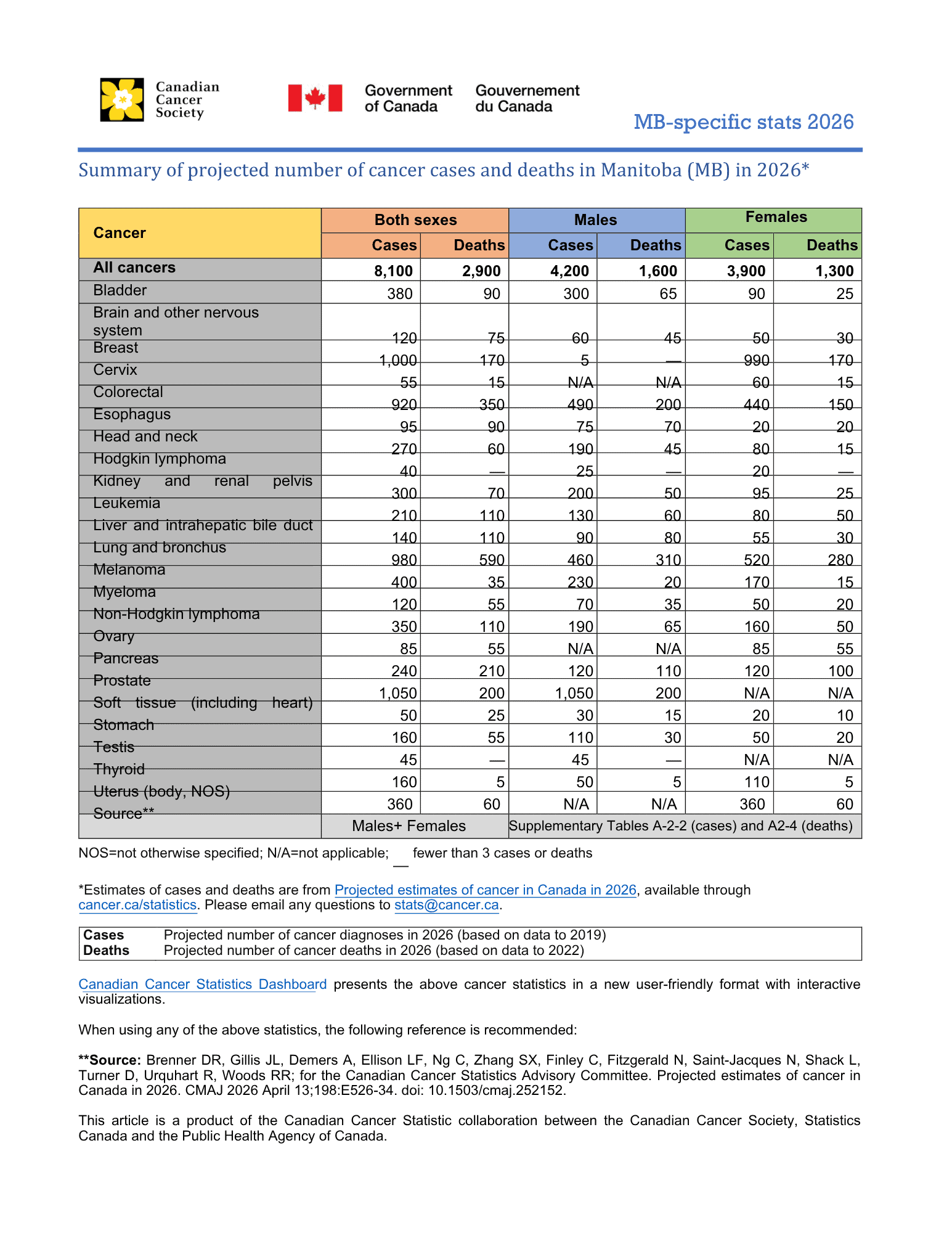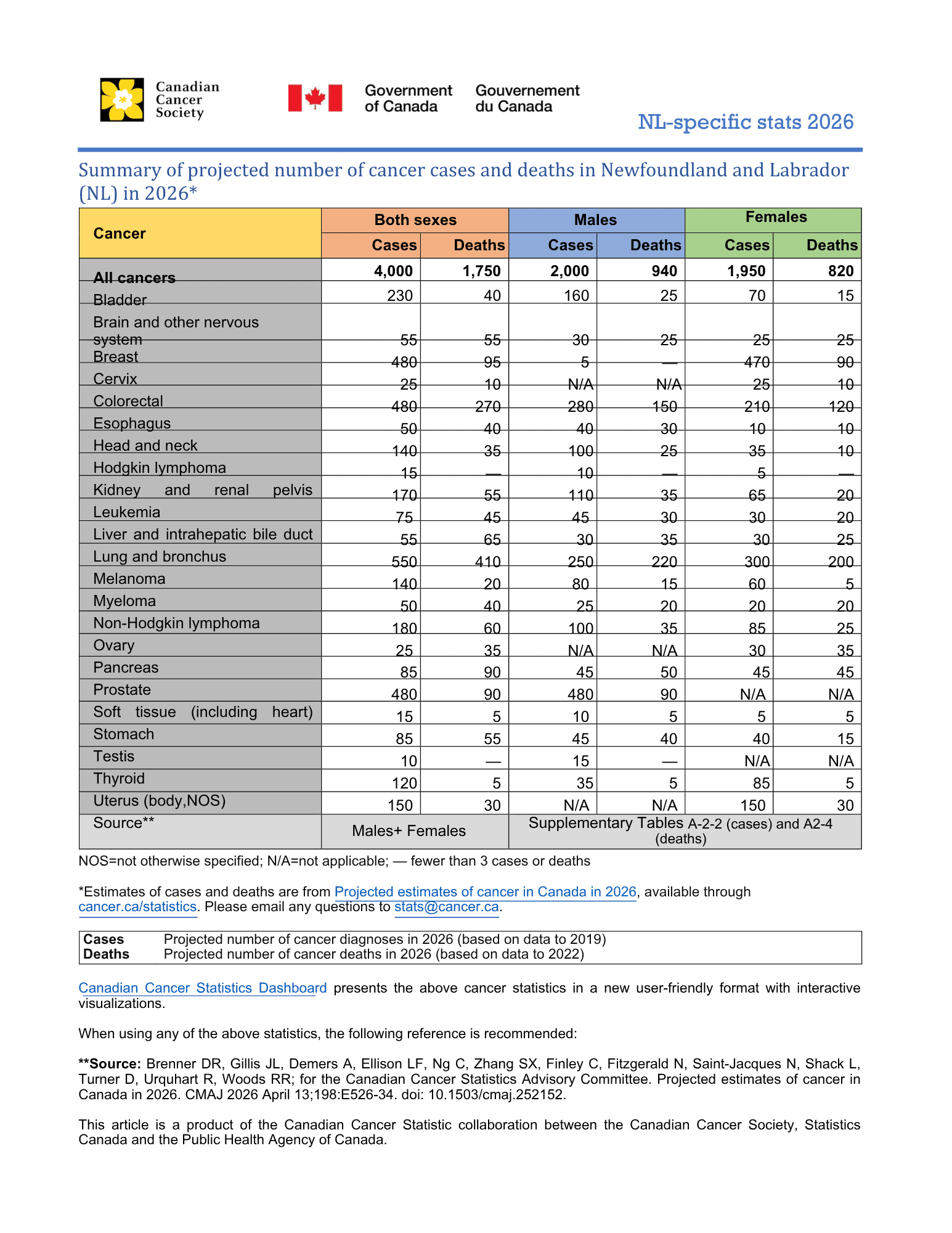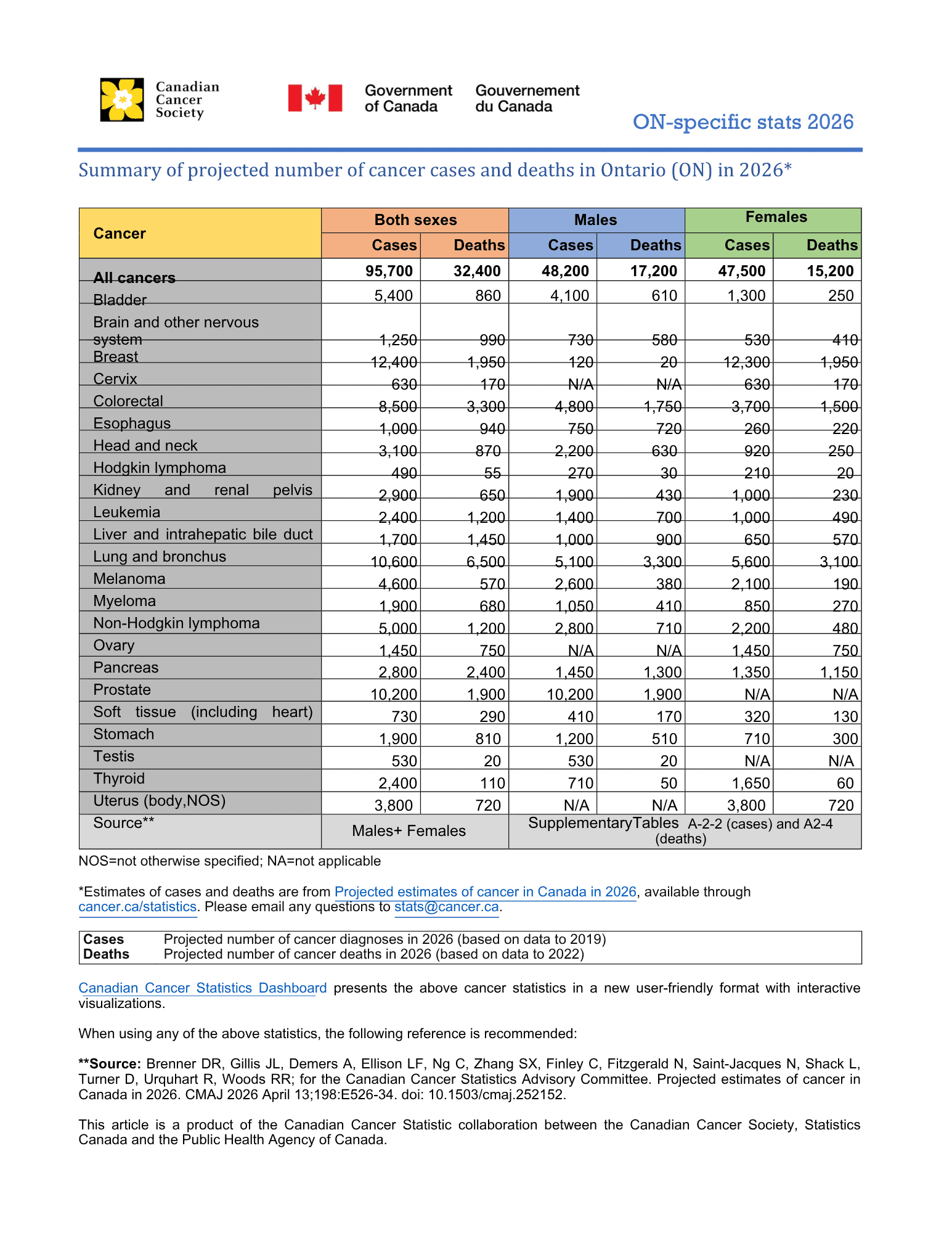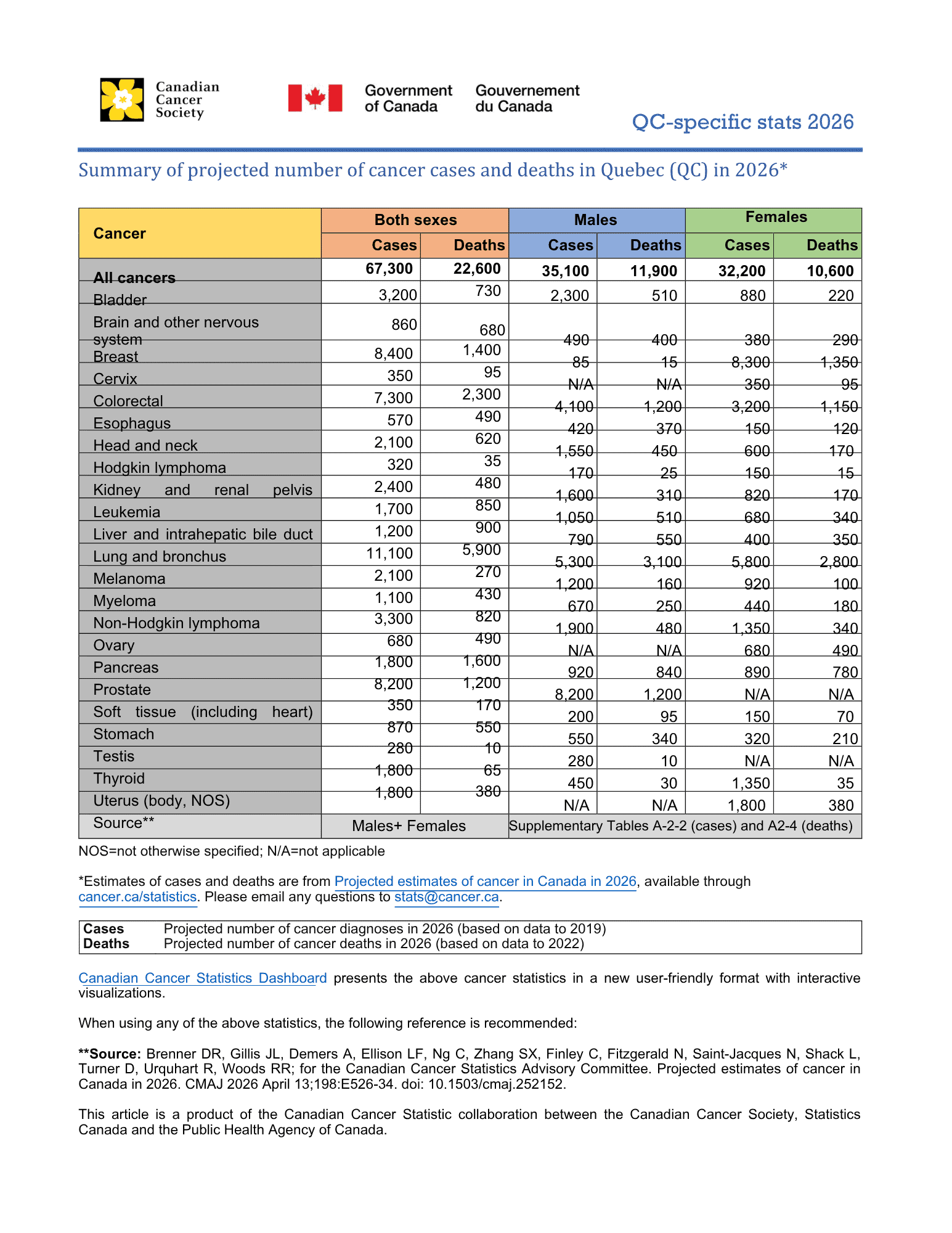






Cancer in Canada has remained virtually unchanged over the past year.
The Canadian Cancer Society (CCS) has released it’s projections for cancer in Canada for 2026. We have not seen much change in the numbers over the past year. CCS has predicted that cancer rates remain stable, although there is some variation in individual cancers and age groups.
Canadian Cancer Survivor Network, Executive Director, Lindsay Timm commented on the new statistics saying, “Seeing the stats hold steady is encouraging to see. We know that this is an estimate of what we could see in 2026, so we watch with cautious optimism. With advancements in diagnostics and treatments it is not surprising that the landscape of cancer is stable for the most part.”
According to CCS, this year’s predictions include these important points:
• Cancer continues to be the leading cause of death in Canada, with about 1 in 4 deaths in 2026 from cancer.
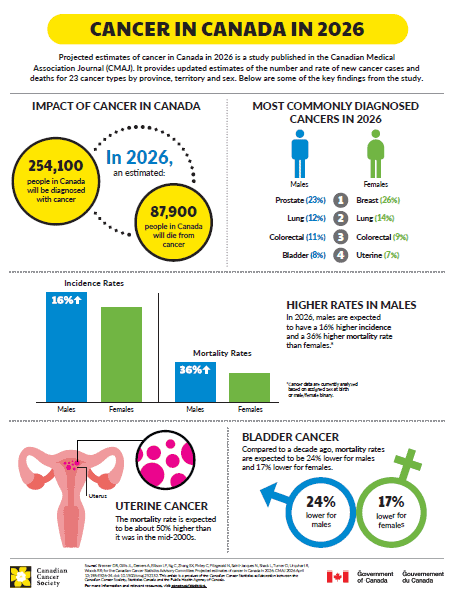
• It is projected there will be 254,100 new cancer cases and 87,900 cancer deaths in 2026.
• As in previous years, lung cancer is projected to be the most-diagnosed cancer (32,900) and the number one cause of cancer death (19,200) in both males (21%) and females (23%), causing 1 in 5 cancer deaths.
• Consistent with previous years, cancer rates are lowest in western Canada and highest in eastern Canada.
• Among males, the most common cancers are expected to be prostate (23%), lung (12%), colorectal (11%), and bladder (8%).
• In females, the most common cancers are expected to be breast (26%), lung (14%), colorectal (9%), and uterine (7%).
• For males, the cancer incidence rate is projected to be 16% higher and mortality rate 36% higher than for females.
• Pancreatic cancer is increasing and is projected to be the third leading cause of cancer death.
• Some types of cancers are declining, with colorectal cancer projected to be 32% lower in males and 29% lower in females compared with the early 2000s.
• However, more females than males are projected to be diagnosed with lung cancer in 2026.
It is important to note that these are predictions about cancer in 2026, and not the official statistics. The latest updated statistics can be found HERE.
Click here for the Canadian Medical Association Journal article.