





Dear Mr. LeBlanc, Ms. Boudreau, and Task Force members,
On behalf of the undersigned patient advocacy organizations, we welcome the creation of the Pharmaceutical and Life Sciences Sector Task Force and its mandate to strengthen Canada’s life sciences competitiveness while improving access to innovative medicines.
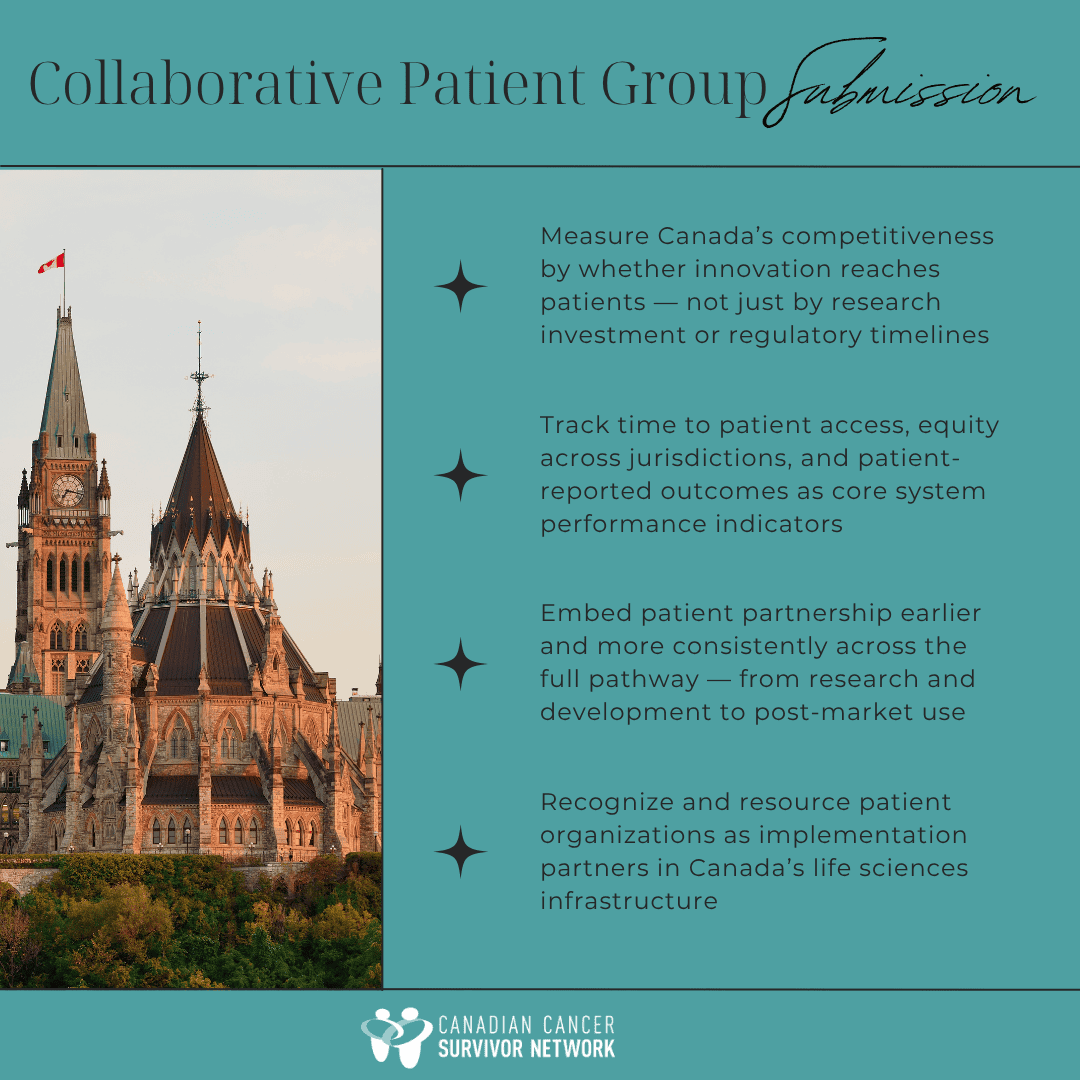 We are writing to recommend that patient access, lived experience, and patient partnership be treated as central measures of Canada’s life sciences competitiveness. Canada’s competitiveness should not be measured only by research investment, clinical trial activity, regulatory timelines, or reimbursement decisions. It should also be measured by whether innovation reaches people in a timely, equitable, and meaningful way.
Patient involvement should be seen not as a final consultation step, but as a practical driver of better decisions, better implementation, and better outcomes. Measures such as time to patient access, equity across jurisdictions, patient-reported outcomes and experience, and key access delays should be tracked across the full pathway — from research and development to regulatory review, health technology assessment, reimbursement, implementation, and post-market use.
Patient organizations are active system operators. We contribute to evidence generation through patient-reported experience measures and patient-reported outcome measures that inform Canada’s Drug Agency (CDA) and Institut national d’excellence en santé et services sociaux (INESSS), the pan-Canadian Pharmaceutical Alliance (pCPA), and reimbursement processes. We support shared decision-making, provider education, diagnostic access, treatment adherence, patient navigation, clinical trial recruitment and retention, advocacy with provincial/territorial health plans and private insurers, and clinical guideline development. These activities help move innovation from research into real-world access, use, outcomes, and health system value.
Canada cannot be globally competitive if patients experience long delays between therapeutic innovation and patient access. Access delays are not only reimbursement issues; they are system performance issues. When patients wait for diagnosis, specialist assessment, public or private coverage, consistent provincial listing, or local implementation, costs are shifted elsewhere through avoidable healthcare use, out-of-pocket costs, productivity loss, caregiver strain, disease progression, disability, and expensive late-stage disease management. According to Innovative Medicines Canada, it currently takes an average of 736 days following Health Canada approval for Canadian patients to access a medicine through a public drug plan — compared to 226 days through private coverage, and more than a year sooner in most peer countries.
Canada’s federated model also creates uneven access across provinces and territories. This undermines patient outcomes and makes Canada less attractive for life sciences investment because the pathway from approval to uptake is variable, slow, and difficult to evaluate. The Task Force should therefore consider access and implementation as central to Canada’s life sciences strategy.
To read the full text, click HERE.